February 17, 2026
What Does a 20% Profit Margin in Australia Mean?

Table of Content
1. Why Profit Margin Matters
2. What Is a 20% Profit Margin?
3. How to Calculate a 20% Profit Margin
4. Gross Margin vs Net Margin
5. Is a 20% Margin Good in Australia?
6. Why Margin Matters More Than Revenue
7. How a 20% Margin Supports Cash Flow in Australia
8. How Businesses Achieve a 20% Margin
9. Case Study: Builder Increased Margin from 9% to 21% With Growth Prop
10. How Lodge Pro Can Help You Achieve Similar Results
Why Profit Margin Matters
In the world of business, “margin” is one of the most commonly used — and often misunderstood — financial terms. If you are running a construction company in Australia, understanding your margin is critical to long-term success.
So, what does it actually mean to have a 20% profit margin in Australia? Let’s break it down in simple terms and explore why it matters.
What is a 20% Profit Margin?
At its core, a profit margin measures how much money your business keeps after covering costs. It’s usually expressed as a percentage.
There are different types of margins, but when most people refer to “a 20% margin,” they mean net profit margin — the percentage of revenue left over after all expenses have been paid.
The formula looks like this:
Net Profit Margin = (Net Profit ÷ Revenue) × 100
If your business earns $100,000 in revenue and keeps $20,000 in profit after all expenses, your net profit margin is 20%.
In simple terms:
For every $1 your business earns, you keep 20 cents as profit.
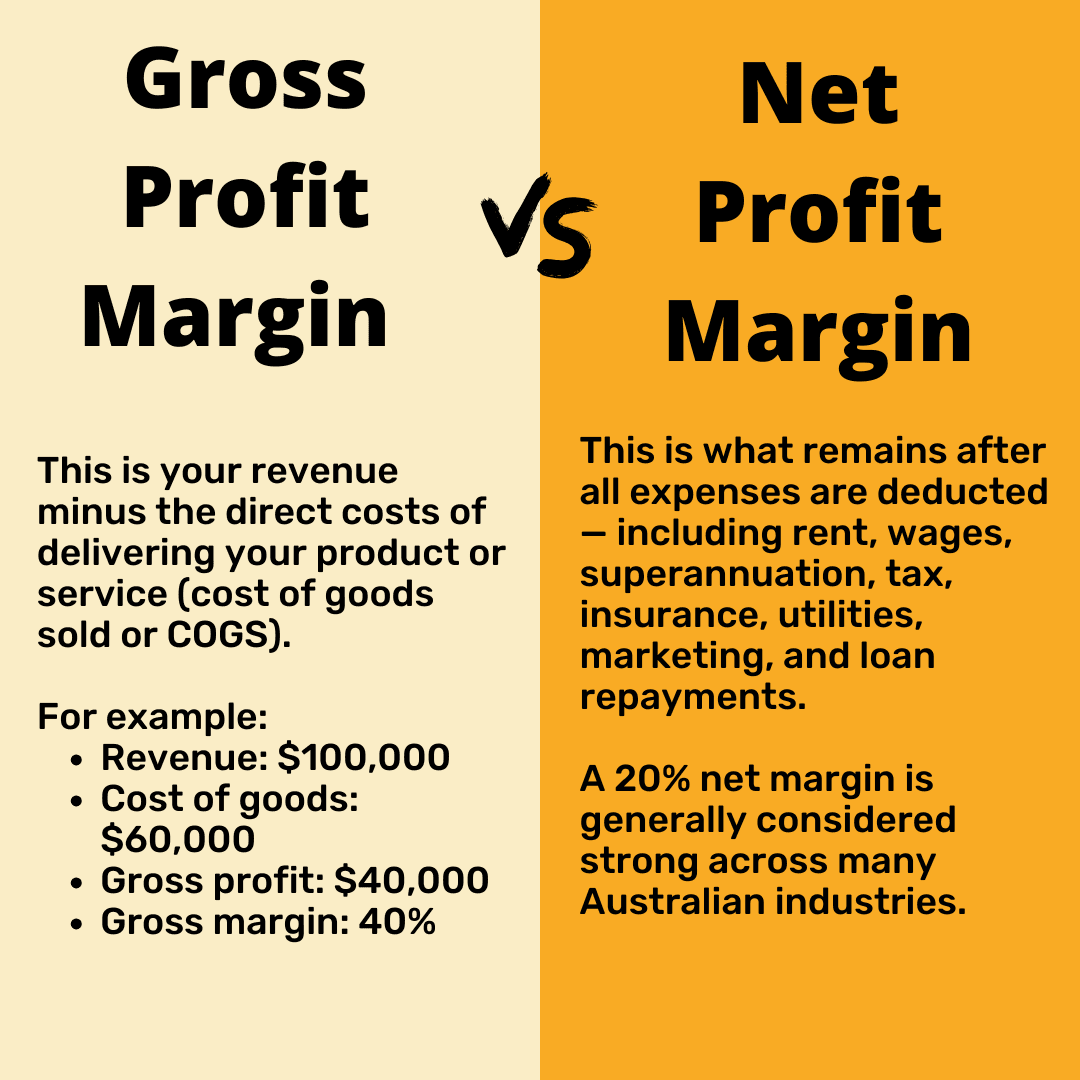
Gross Margin vs Net Margin
Before going further, it’s important to distinguish between:
Is a 20% Margin Good in Australia?
The answer depends on the industry.
In Australia, margins vary significantly:
Retail: Often 2%–10% net margin
Hospitality: Typically 5%–15%
Construction: Around 5%–10%
Professional services (consulting, financial planning, legal): 15%–30%
Tech or digital services: Can exceed 20%
So, if your business has a 20% net profit margin, you are likely performing above average in many traditional industries and competitively in service-based sectors.
Why Margin Matters More Than Revenue
Many Australian business owners focus heavily on revenue growth — hitting $500k, $1 million, or $5 million in turnover. However, revenue alone doesn’t guarantee financial health.
Consider two businesses:
Business A
Revenue: $1,000,000
Net Profit Margin: 5%
Profit: $50,000
Business B
Revenue: $500,000
Net Profit Margin: 20%
Profit: $100,000
Even though Business A makes double the revenue, Business B makes twice the profit.
A 20% margin means your business is:
Efficient
Cost-controlled
Financially sustainable
Better positioned for reinvestment and growth
How a 20% Margin Impacts Cash Flow
In Australia, businesses face unique cost pressures:
High wage standards and Fair Work obligations
Superannuation contributions
Payroll tax (in some states)
GST reporting requirements
Rising rent and energy costs
Insurance premiums
Maintaining a 20% margin provides breathing room. It allows you to:
Build cash reserves
Invest in marketing and growth
Upgrade systems or technology
Weather economic downturns
Pay yourself properly as a business owner
Without a healthy margin, even strong revenue can leave you cash-strapped.
What It Takes to Achieve a 20% Margin
Reaching a 20% margin in Australia often requires a deliberate strategy.
1. Strong Pricing Strategy
Many businesses underprice their products or services. To maintain a 20% margin, your pricing must reflect:
True cost of delivery
Overheads
Desired profit
Market positioning
Discounting too heavily or competing solely on price can quickly erode margins.
2. Tight Cost Control
Regularly reviewing expenses is crucial. This includes:
Supplier contracts
Software subscriptions
Labour efficiency
Inventory management
Even small savings can significantly improve margin over time.
3. Operational Efficiency
Streamlined processes reduce waste. This might mean:
Automating admin tasks
Improving staff scheduling
Reducing stock losses
Negotiating better supplier rates
4. Value-Based Selling
Especially in professional services, businesses with 20%+ margins often focus on value rather than hours worked. Clients pay for expertise, outcomes, and reliability — not just time.
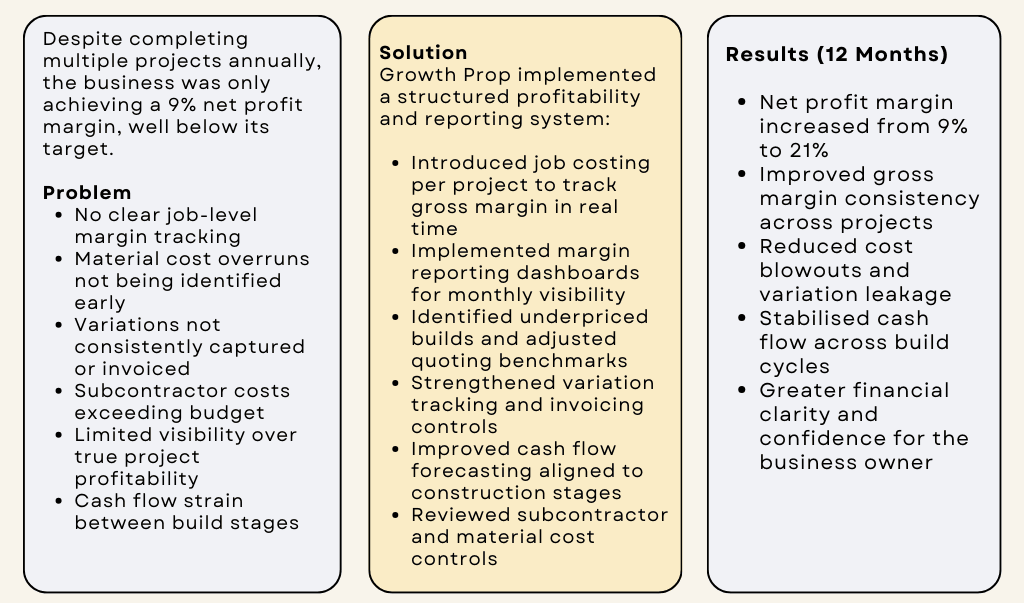
If you want to push toward a 20%+ profit margin with clearer numbers and tighter control, Growth Prop can help you implement the same approach and get similar results.
Subscribe to our weekly newsletter!
Tax breaks in your inbox! Subscribe now.
You can easily unsubscribe from future emails at any time.

Compare us with!

Lodgepro is a ATO Registered software powered by GrowthProf Tax consultancy